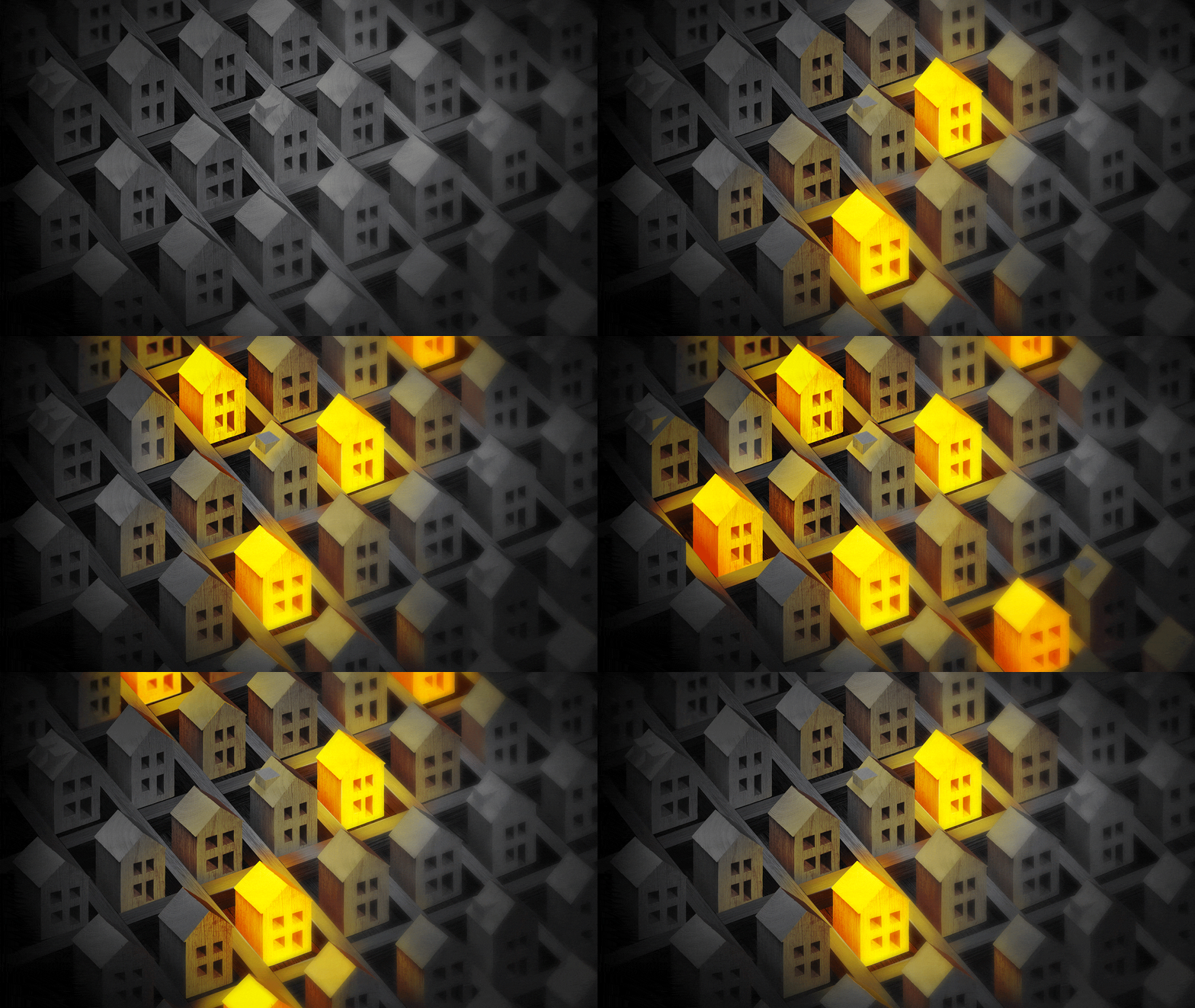
This project started life as a simple artworking brief for Gideon Maier's Outlier agency. But it soon grew into possibly the largest global campaign I've ever created. This was made all the more so by the fact that for the most part I was the sole designer on the job.
The talented Liam Riddler supplied initial imagery and a handful of scamps, which he had worked on with copywriter and creative director Ross Keenleyside. Mike Nicholson ran the strategy side of things while Paul Gillespie, alongside Gideon, handled the day-to-day affairs.
I was initially tasked with retouching the images (cleaning them up, adjusting colours to conform to QBE's guidelines, and extending them to create additional space), then using them to design a consistent set of compliant portrait and landscape masters.
These were built to digital specs, as the campaign was meant to be online only.
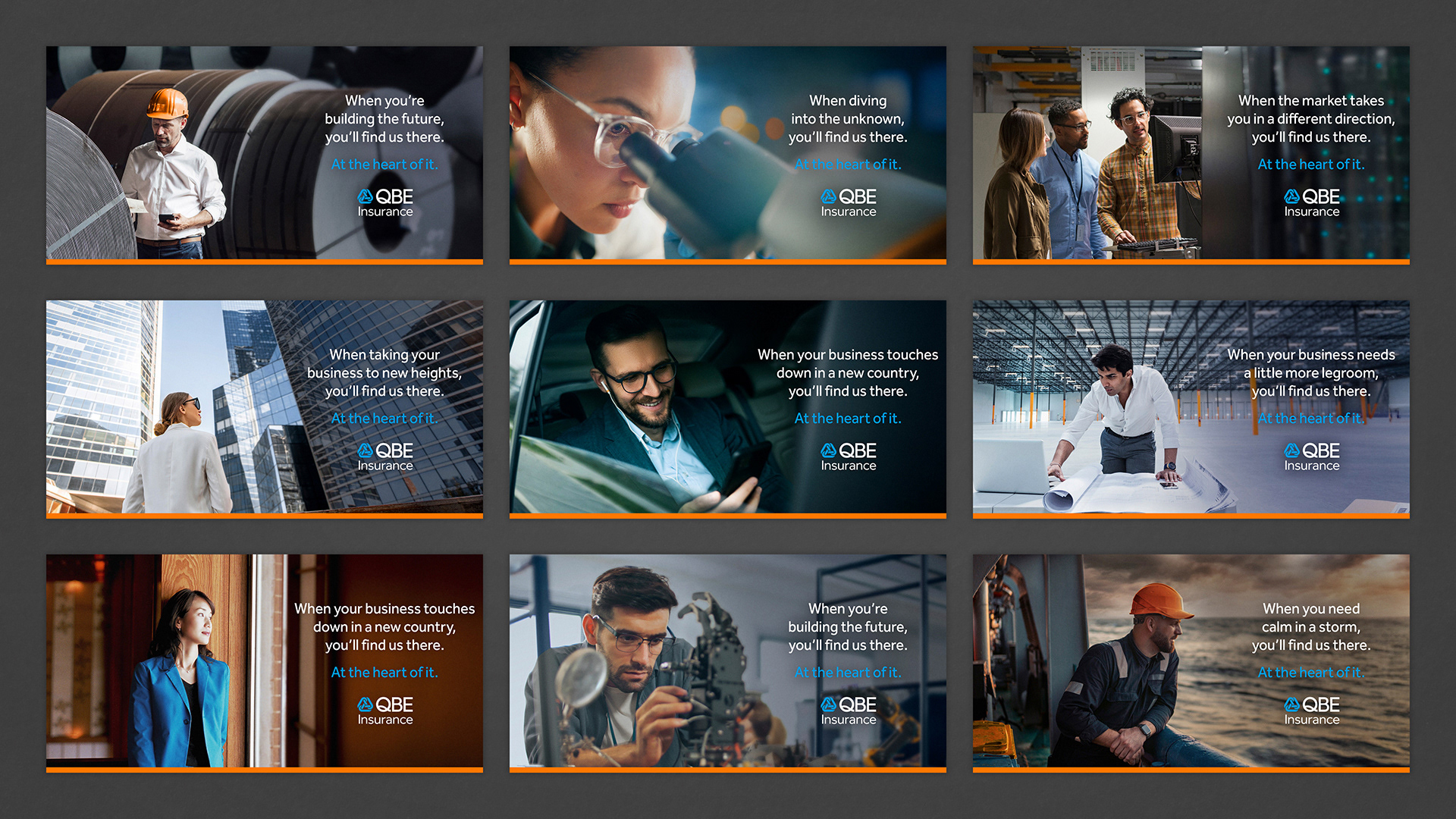
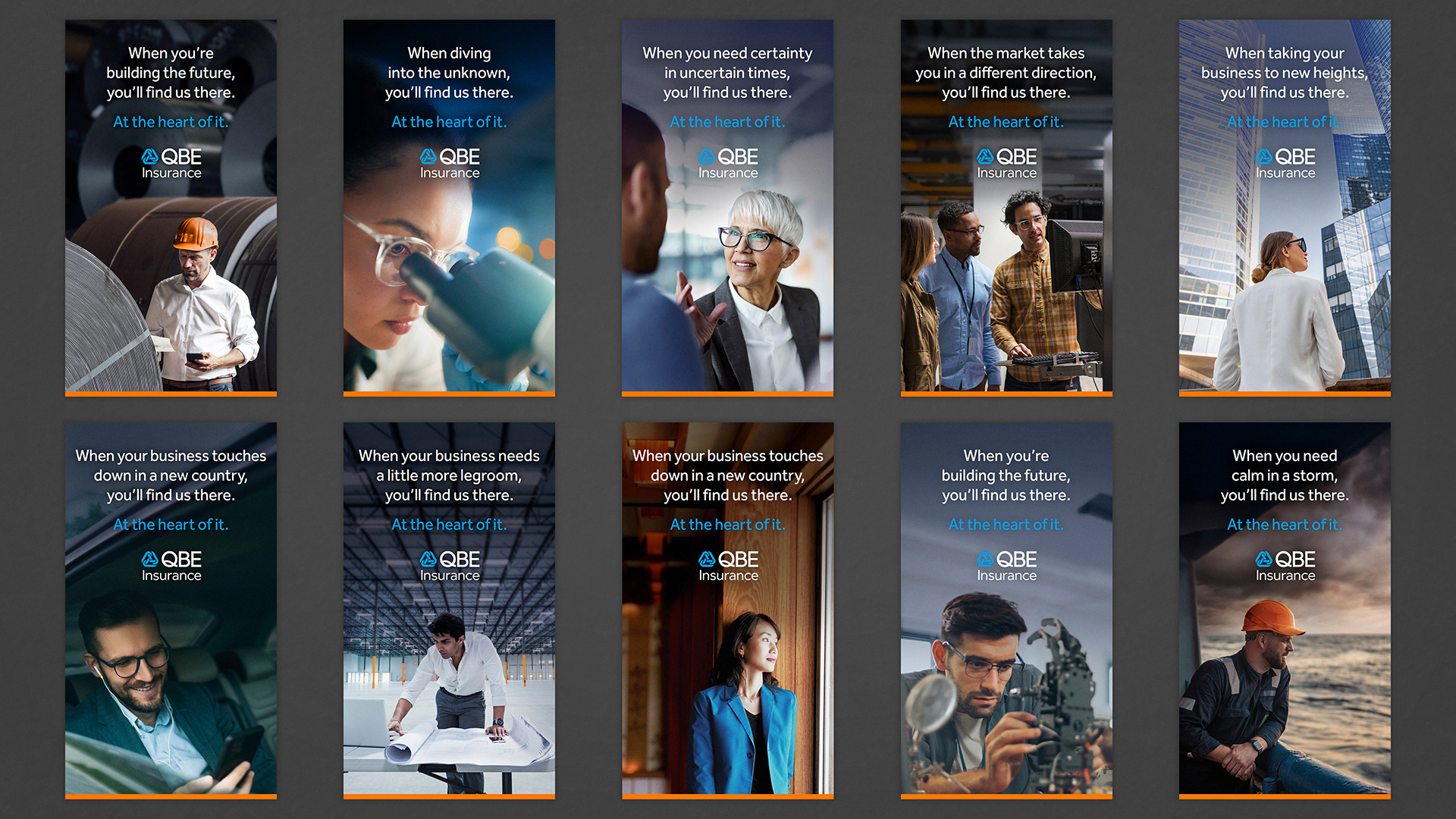
Once these were complete and signed off, I made a variety of static adapts to different sizes before starting on the first sets of GIFs. The GIFs came in all the usual shapes (MPU, Halfpage, Leaderboard, Billboard, Mobile Banners etc), with a few less common sizes thrown in (Mobile Interstitial, Floor Banner etc). Many of the above masters needed to be systematically adapted to all these different shapes (a few of which are shown below).
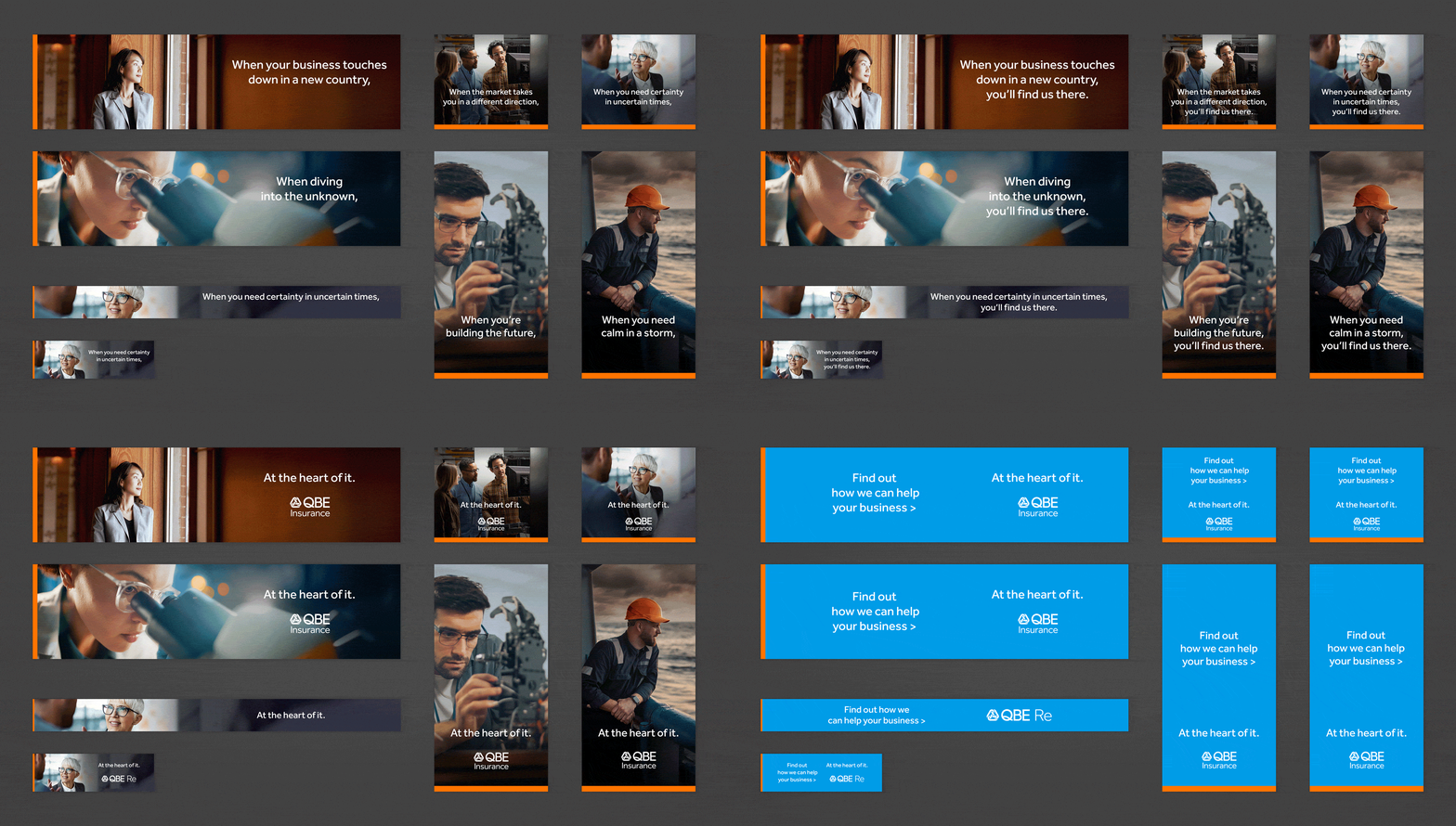
The initial campaign was popular with the clients, so they decided to roll it out overseas. One of the new tasks was to adapt some of the existing GIFs to foreign language versions. It was important to try to set the various translations with line breaks that made sense as natural pauses in that language. But some languages are longer than others, so subtle redesign was also necessary in certain instances. It was decided that the work for South East Asia would be set in English and passed to the local offices for them to either run as is, or translate themselves. This meant the files and their internal structure needed to be impeccable.
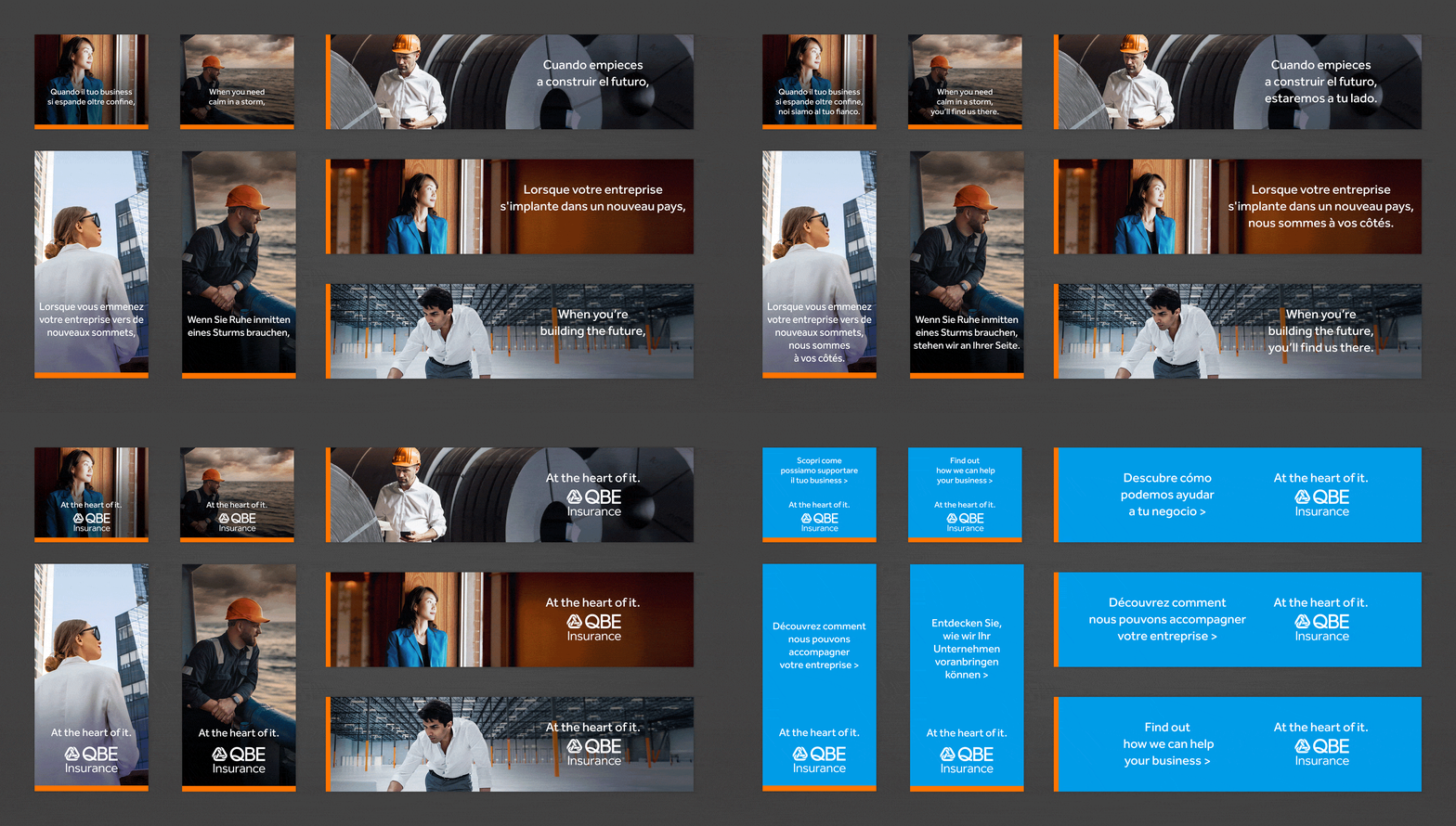
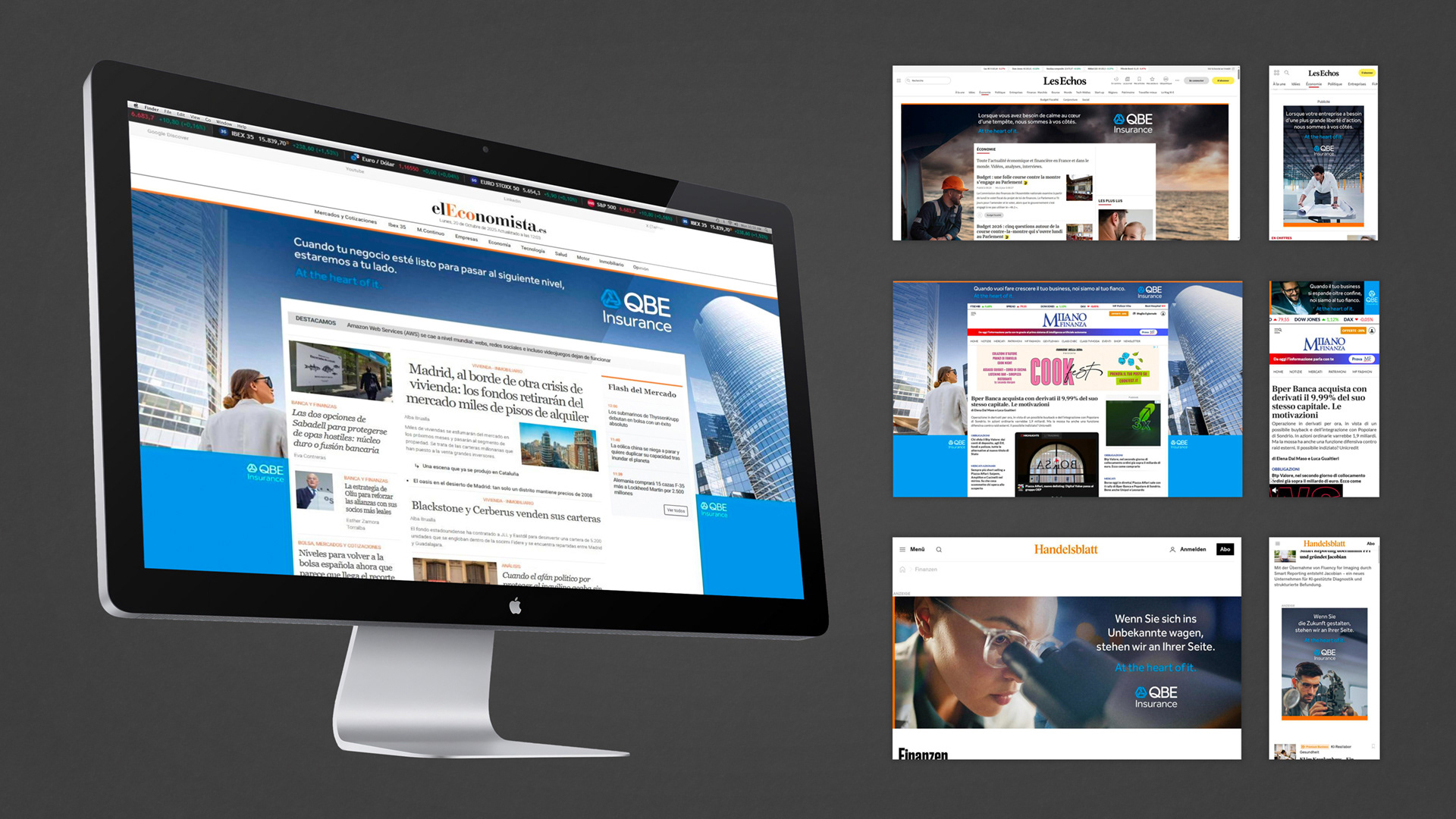
Another facet to the European part of the campaign was to adapt some of the executions to become wallpapers and skins for various news sites. These move in different ways to one another, with some parts scrolling, some expanding, and others static, so, as ever, careful attention was paid to the different specs. Again, a small selection of the final work is shown below.
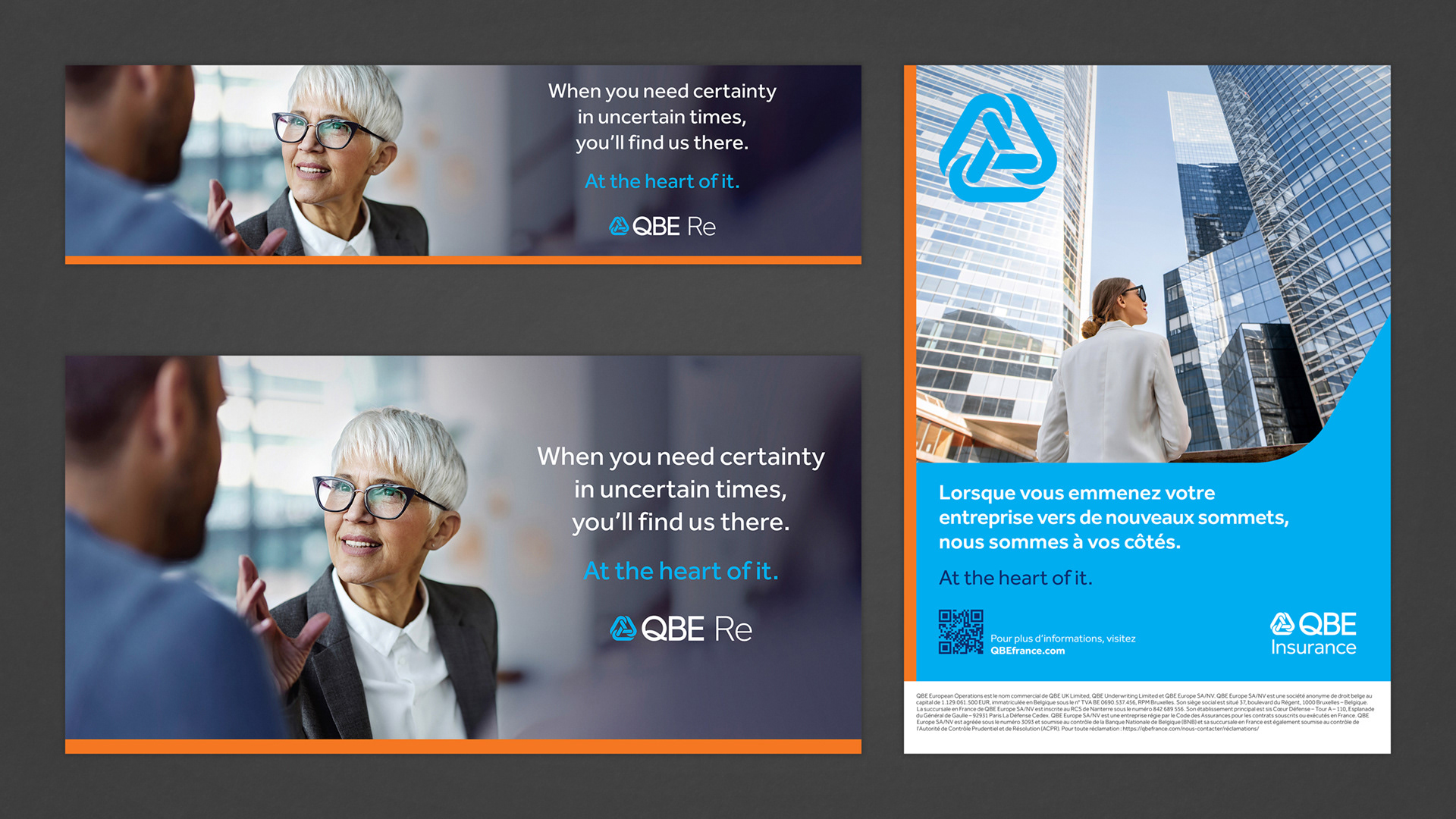
Throughout this process there were also various print banners and press ads to create, some as simple adapts from our master key art, others adhering more closely to standard QBE page layouts, (as dictated by their guidelines).
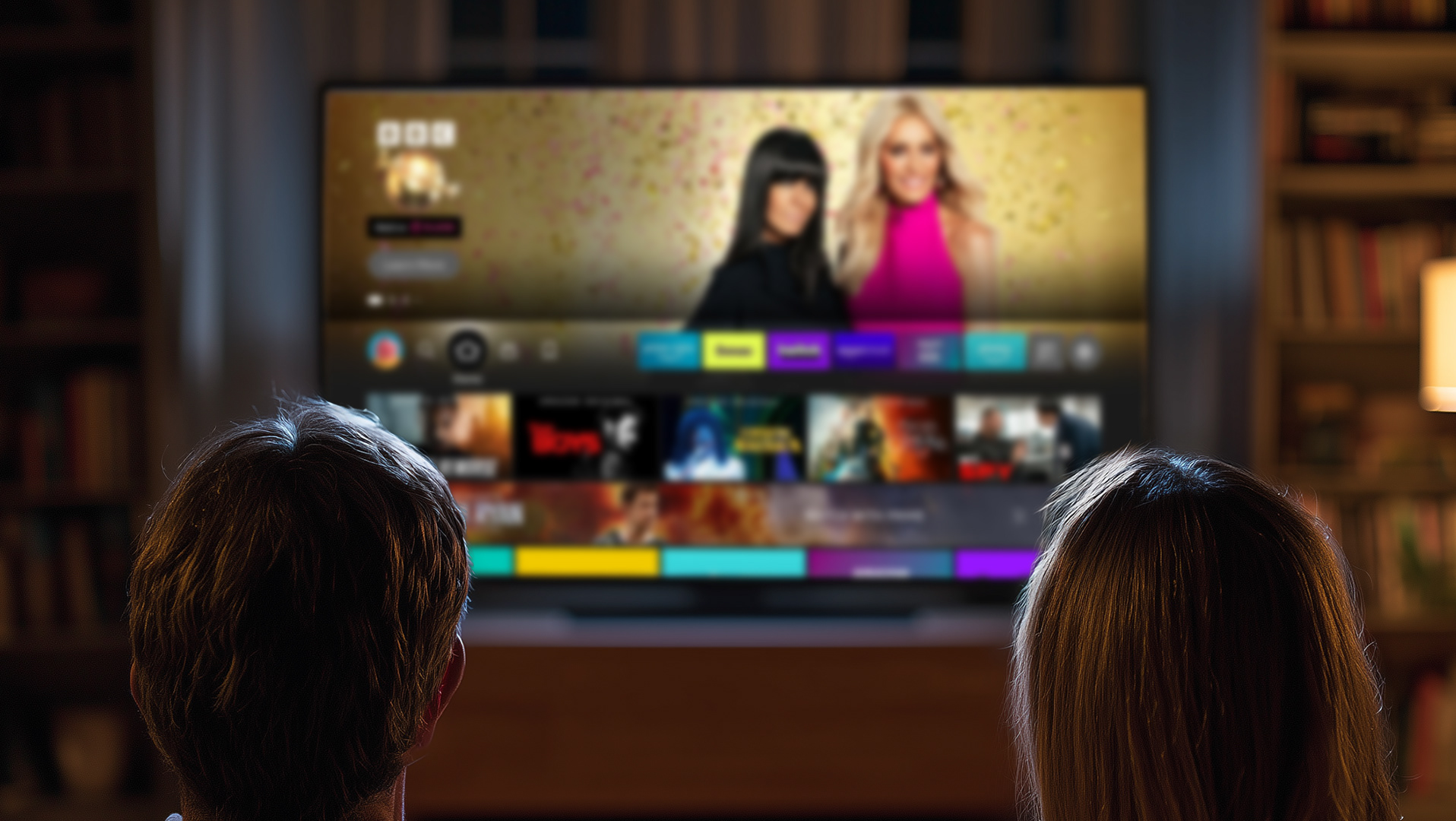
For the next part of the project, the client's media agency booked screens in a selection of the world's airports and rail hubs. The screens were able to display subtle motion as full video (rather than GIF animation), but we were only to use the original static images from the masters. Instead of just applying a simple 'Ken Burns' pan and crop, I decided to create a parallax effect by cutting the images into depth layers, filling in the gaps, and recomposing them in After Effects. I ended up creating in the region of 20 different versions of these videos, in both landscape and portrait formats, and even made a split screen one where the movement crossed between two adjacent screens.
One of the big surprises for the project came when we were asked to create a taxi wrap. This meant the resolution of the chosen image had to be significantly increased, which I did in Photoshop with a mixture of AI upscaling tools and old school retouching.
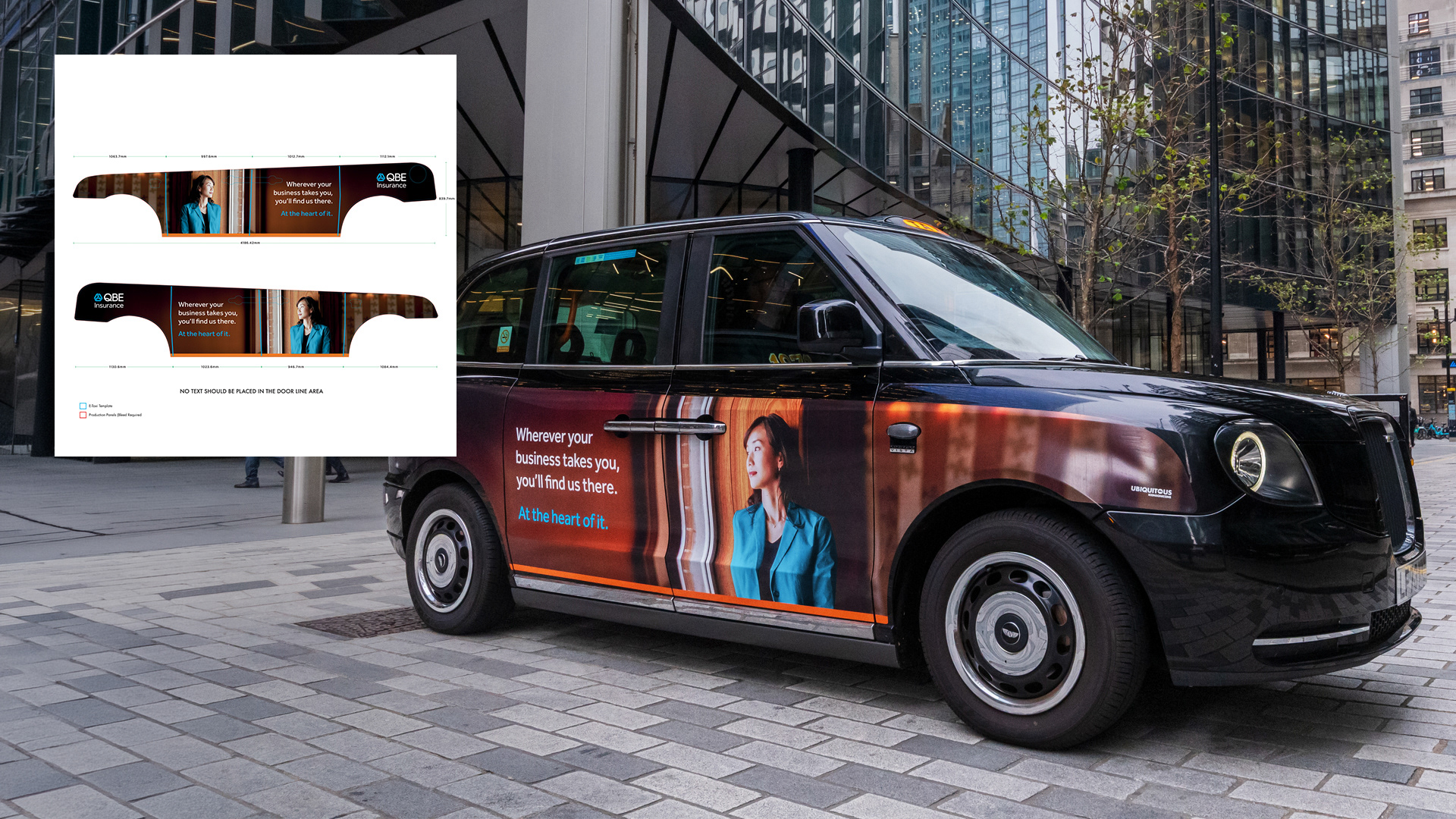
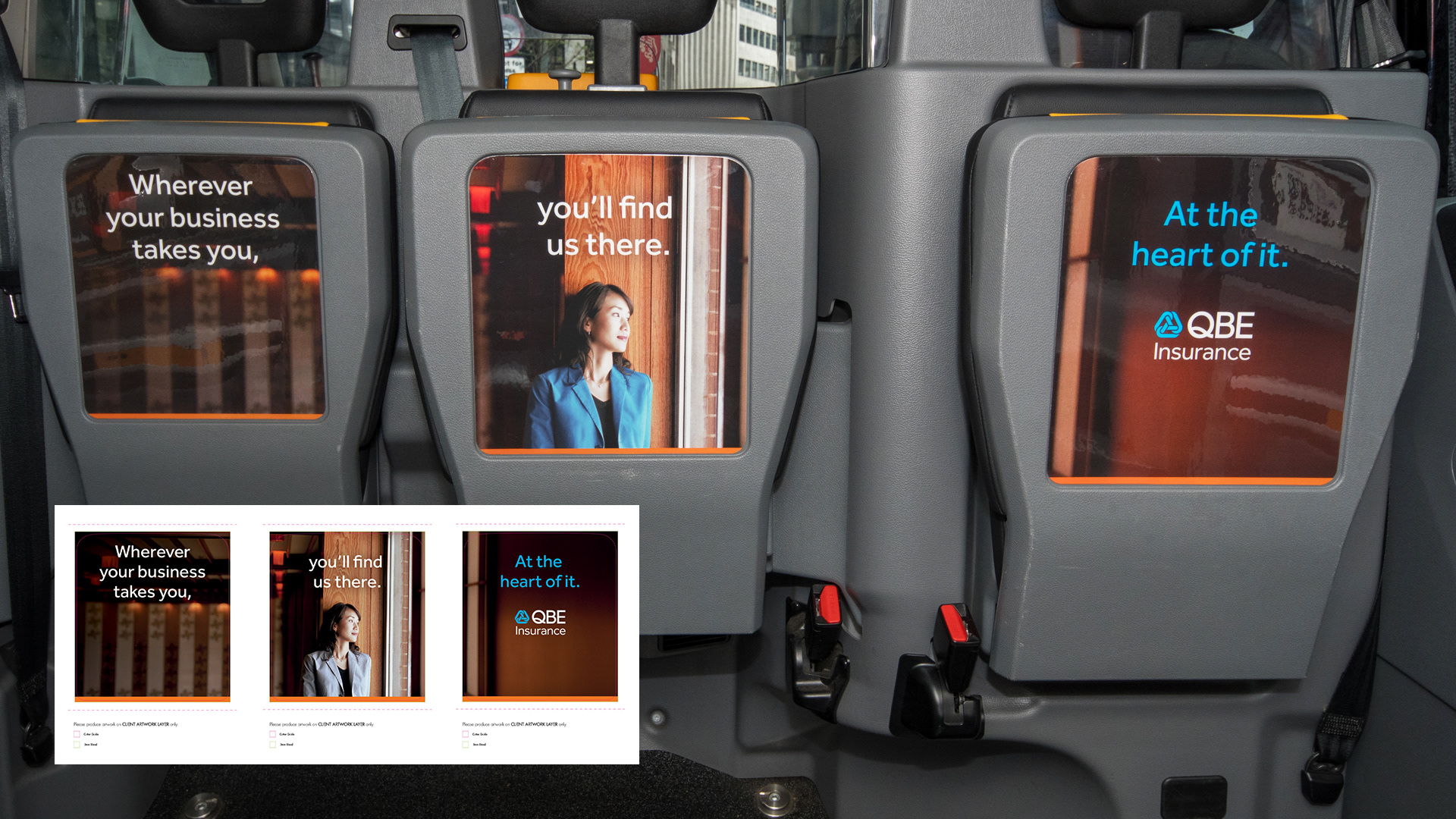
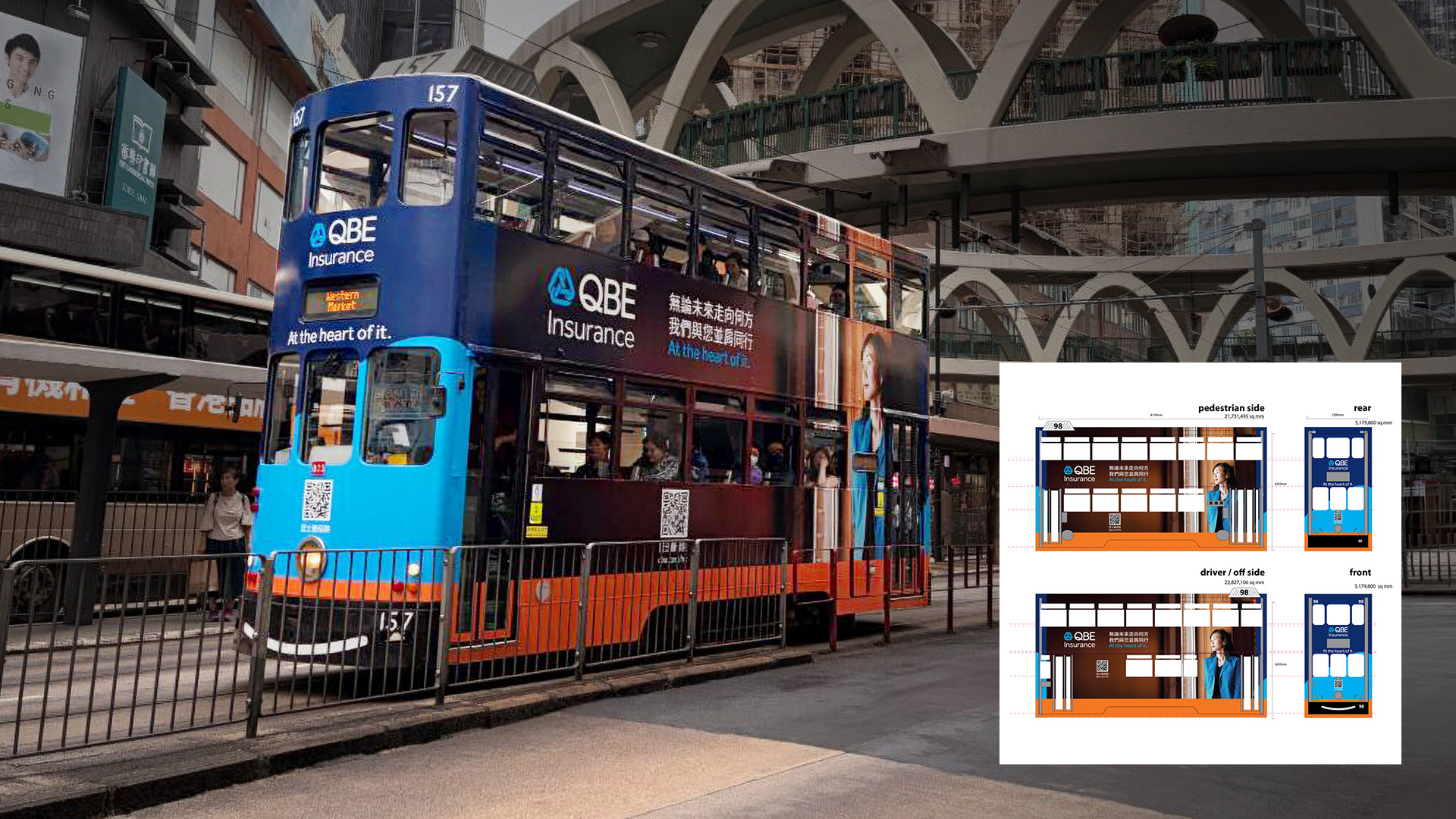
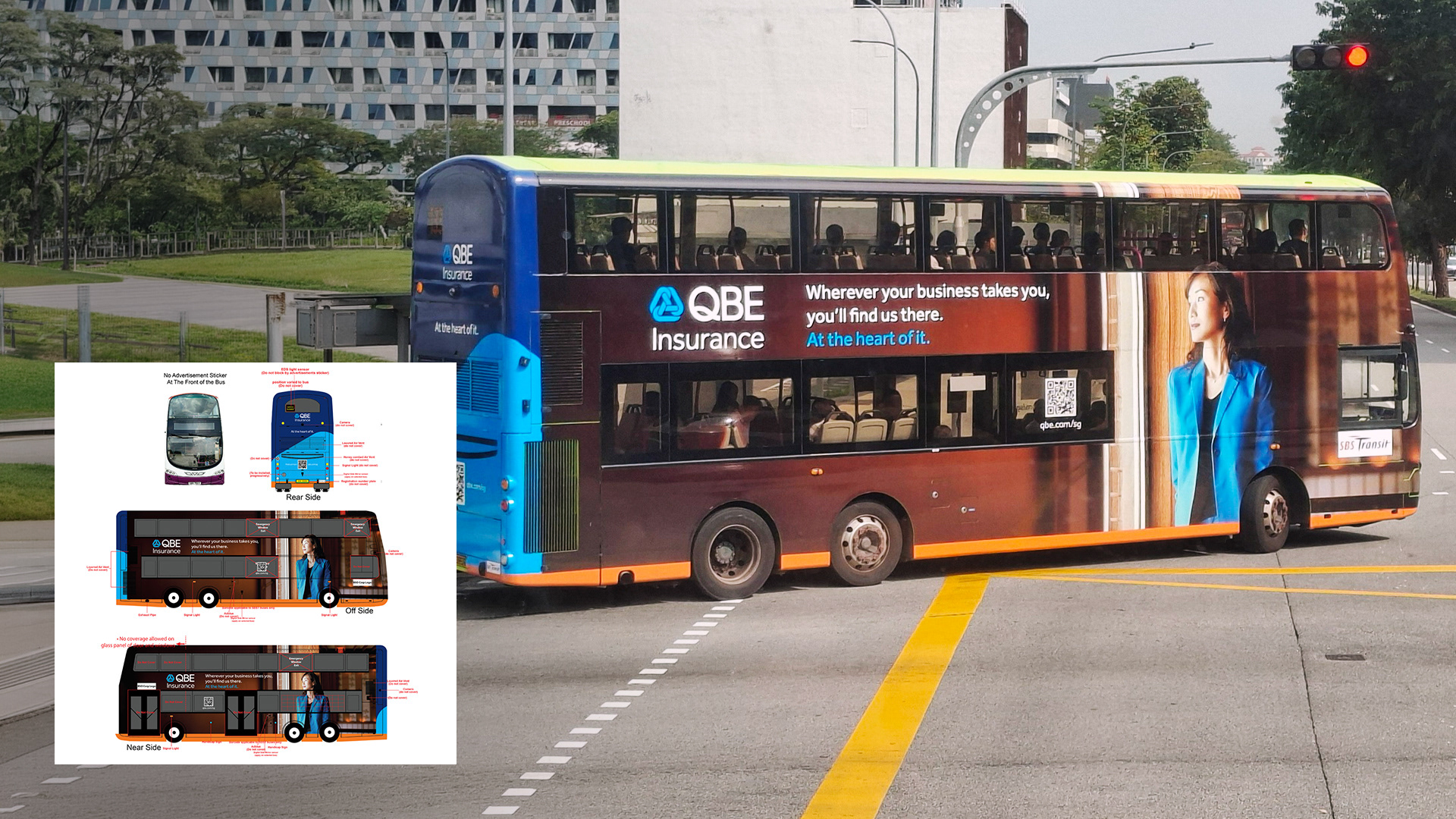
The London taxi was well received, so towards the end of the project QBE decided to replicate its success on the sides of trams in Hong Kong, and buses in Singapore. However the image was once again too small for these much larger spaces, and the various Photoshop upscaling methods weren't bringing the quality levels high enough. So for this additional increase in size, I added in a step with the generative upscale tool, Topaz, focusing on the character's face. This was then blended into the rest of the image with classic retouching techniques to ensure everything felt natural. What started life as a slightly grainy, online library image, smaller than A4 in size, ended up 4 metres tall and about 12 metres wide.